
Susan Ratcliff Released from Prison after 47 Years
Issue #15: An Interview with Our Author Student on Second Chances

“Before her, the Earth turned a blue-green marble, glistening with life.
Clouds obscured the region she had under observation.
She sighed, longing for the days when she ran with Marie
in the sun, wind, and rain.
Marie took pleasure in all the little things
and taught Theta the meaning of being alive. ”
—Susan Ratcliff, “The Mercy Protocol”
Susan Ratcliff: Released from Prison after 47 Years
Dear Readers,
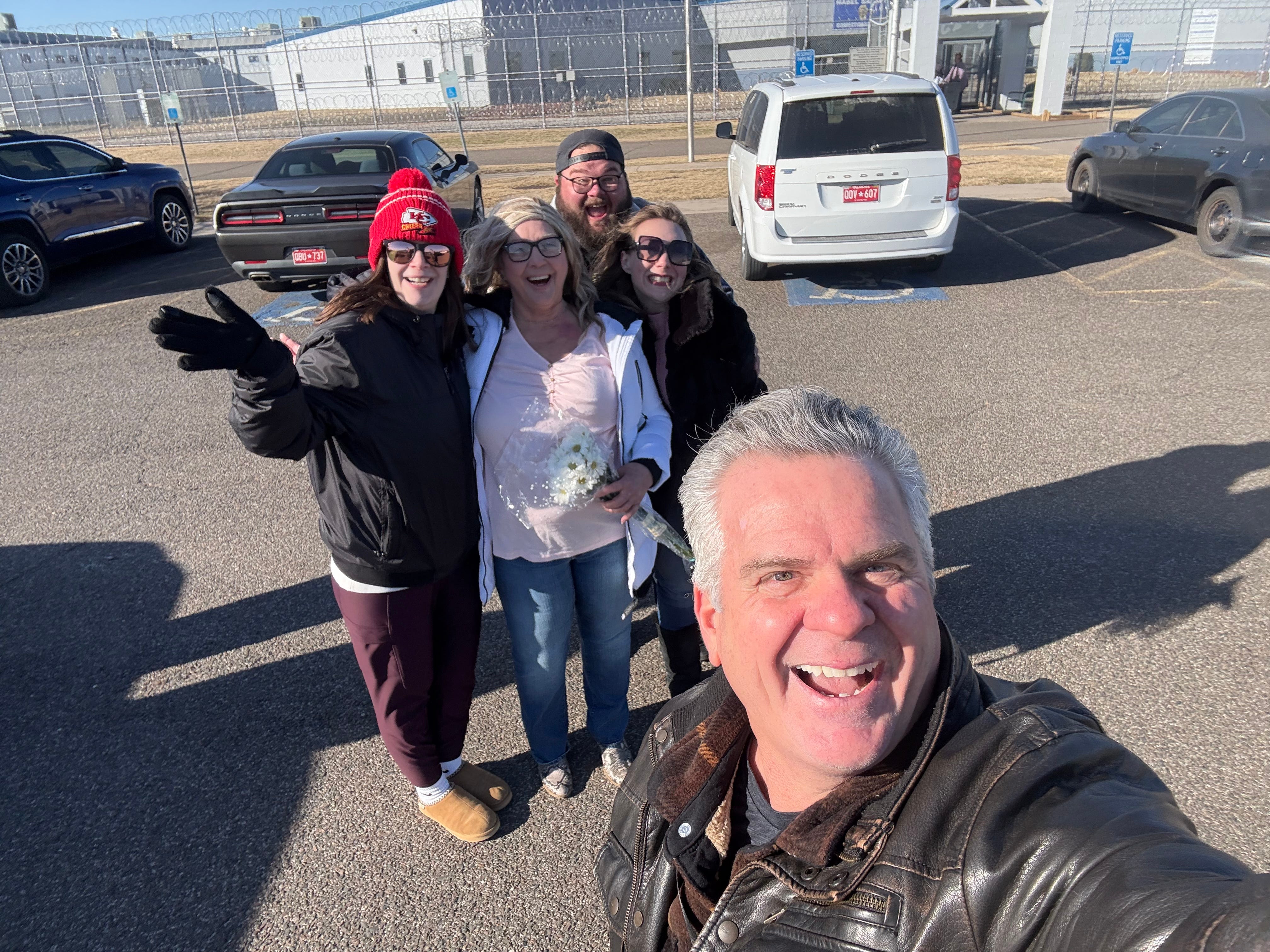
When I first met Susan Ratcliff, I had no idea that one day I’d get to hug her outside of the prison walls on a blustery January morning. But that’s exactly what happened.
Susan joined our Writers Guild Beginners class in 2025 and completed the program with a published short story entitled “The Mercy Protocol.” We published her story inside the class anthology, Unbound Ink: Of Mercy and Madness. On her birthday, January 14, she received the official Certificate of Commutation from Governor Stitt.
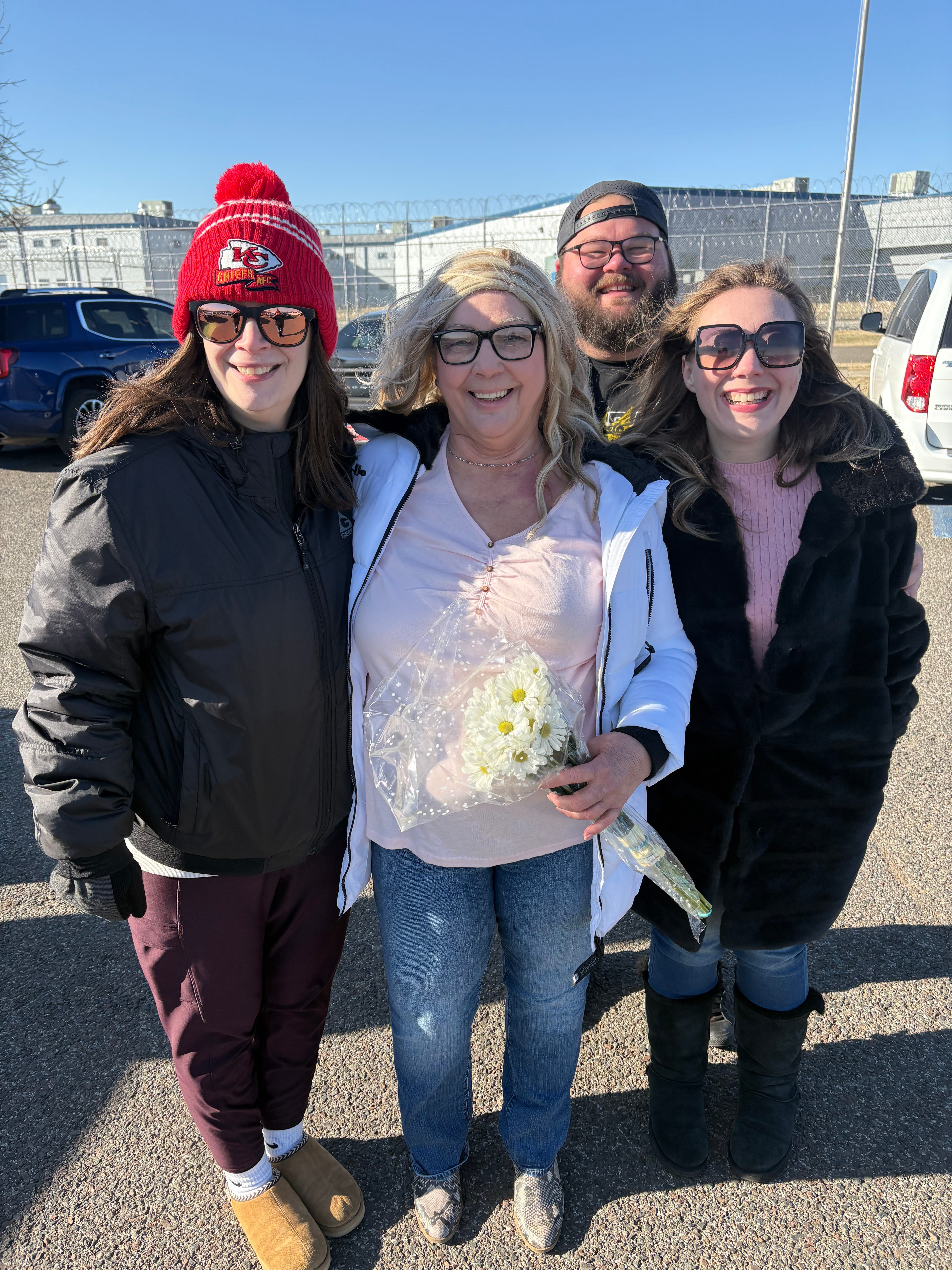
On January 21, 2026, Susan Ratcliff was released from Mabel Bassett Correctional Center after nearly 47 years of incarceration.
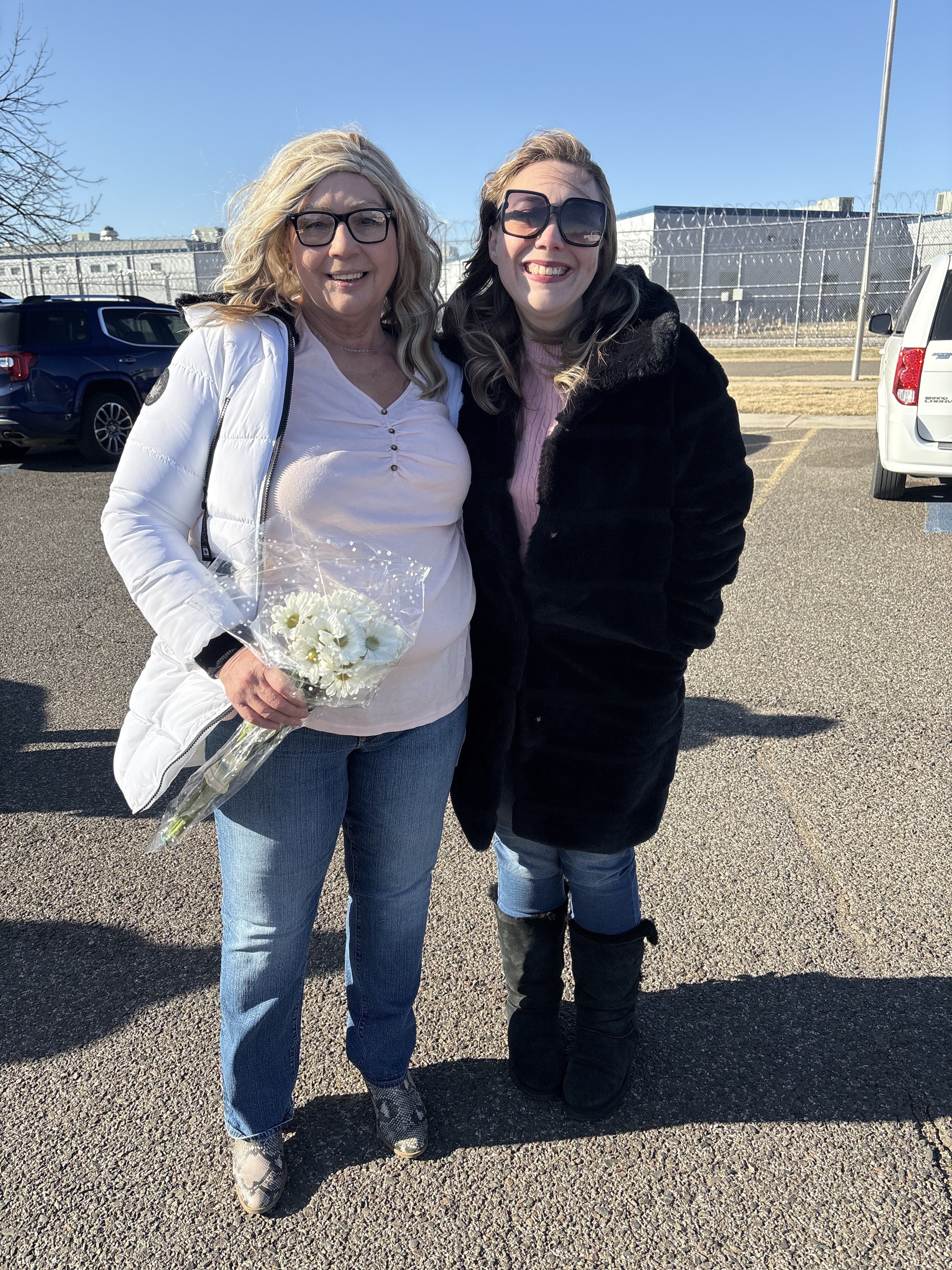
As Susan walked out of those razor-wired gates—in her high-heel snakeskin boots and white puffy jacket, no orange in sight—I didn’t even yell out her name. I stood in silence, just taking in this incredible, beautiful, rare moment.
Susan Ratcliff was free.
But the silence lasted only a minute, as we embraced and cried and cheered. Lance West took his job as videographer very seriously, and captured the unforgettable moment. Susan survived decades of prison time; she survived breast cancer, a mastectomy, and radiation treatments. But she also found love inside those prison walls, and I don’t ever want to diminish that. Yes, prison is obviously tough; but Susan is tougher. And there really are bright moments inside those walls.
Watching our student walk out of prison as a free woman is a moment I will never forget. We are so proud of her and always will be.
She took the time to answer some questions about her life and her time in prison, so without further ado . . .
1. After nearly 47 years, what does the word freedom mean to you today?
Freedom is being able to go outside, eat when you want, work a job you like. I took the small things for granted before I was locked up. You find it is those things that you miss the most. After 47 years, I’m going to (once again) have a pet, bake a cake (I used to love to bake sweets), do my own laundry, and be who I have grown to be. It will be strange to have no rules for when you sleep, get up, make your bed, etc. Prison is very restrictive if you’re trying to live like you want to get out.
2. After completing the Writers Guild Beginners class, what have you learned about yourself?
I learned that I still carry scars close to the surface. Even though I do my best not to let my past rule my life, it still finds its way into my writing. I found that I am compassionate, even if I don’t want everyone to see inside of me.
3. As you prepare to reenter the world, what parts of yourself feel the most changed?
I find that I have more and less tolerance for people’s games. I don’t have compassion or tolerance for those people who keep coming and going in and out of prison. I look at their wasted lives and can’t find any understanding of why. The younger me was head down and mind my own business; but with age, I could see the need for guidance in some of the younger women coming in.
4. What fears or hopes do you carry with you about life on the outside after so long away?
I fear that I will constantly wonder what others think about me. Does being locked away show? Am I stranger than anyone else?
I hope to reconnect with my mother and sister in a more tangible and significant way. Also, I have two half-brothers I have not heard from in twenty years or more. I want to make new friends too; I have never had many friends in my life.
5. What’s the first thing you hope to eat on your first day out?
I don’t know what kind of food, but I want to sit in a restaurant, get a menu, order what I want, and have someone bring it to me. I don’t want to stand in a line, and I don’t understand the money people pay for Starbucks coffee.
6. If you could speak directly to your younger self at the beginning of your sentence, what would you tell her now?
That she will be okay. To stick to her morals, and everything will work out.
7. What do you want readers to understand about people who have spent decades incarcerated that often goes unseen or misunderstood?
Trite though it is, most of us are not the same person we were in our twenties when we are fifty. If you haven’t fundamentally changed in that length of time, you will never change. We hide our feelings so they’re not used against us; we are fiercely loyal, but are afraid to let people in for fear of rejection and condemnation that has been a mainstay of our lives.
8. What does compassion—toward yourself and others—look like to you today?
I have found in myself a deep well to help the older women who are sick. I want to keep them safe in an environment that is becoming unsafe. I feared being in their shoes when I got older.
9. What strengths did you discover in yourself during your years of rehabilitation that you didn’t know you had before?
I found I had the will and power to keep myself safe. I found the ability to take charge of my life. Most of all through this time, I found that no one has a right to hurt me or others, and I can make a difference.
10. What message of resilience or transformation would you want others still inside to hear from someone standing on the edge of release?
The same message: if you stay away from drugs and follow the rules, you can make it out. They’re afraid to live the so-called square life because it is no fun, but coming into prison all the time is no fun either. There are ways to change and people to help, but it is hard work—you have to be vulnerable. Being hard all the time only keeps you stagnant, not growing. See the opportunity and take it.
Bonus: What else do you want the world to know that I didn’t ask?
That I am a survivor. I survived domestic and sexual violence as a child.
That I survived the violence and degradation in the prison system. I survived men telling me I could not make it in the building trades. (I became the first female inmate to get her journeyman’s license in plumbing in 1994.) I survived the parole board telling me I wasn’t enough, wasn’t good enough, changed enough, worked hard enough . . . until this last time. Now I have survived breast cancer, 16 chemo treatments, 1 mastectomy, and 28 radiation treatments.
If I can survive all that, I can and will survive what is to come.
Bio: “The Mercy Protocol” is Susan White’s first short story, featured in Unbound Ink: Of Mercy and Madness, Volume I. Besides reading, she enjoys knitting, crocheting, and gardening. She especially looks forward to nights with Lord Nibbler and The Princess, her cats.
Lance West filmed Susan Ratcliff’s release, so take a moment to watch the experience on his channels:

“The Cost of a Life: A High Price for a First Offense” by Crystal Avilla for Crosswinds News Team: “I have been serving a life without parole prison sentence for twenty-six years, and so far, it has cost the state of Oklahoma more than $591,500 to house me. But I have paid a much higher price.”
“My Long Hair Isn’t a Vanity Project. It’s My Last Connection to Life Outside” by Lindsey Smith for The Marshall Project: “This foreign landscape of state-issued orange, my long hair feels like all I have left of my identity from before I was given a number and labeled ‘inmate.’ Before I was exposed to the unnatural way women here are herded through fences toward the dining hall like cattle. Before standing naked in front of a stranger became the standard operating procedure of weekly visitations, not the stuff of nightmares.”
“Oklahoma Failure to Protect Law Betrays Survivors like Me” by Ashley Garrison for The Oklahoman: “If Oklahoma is serious about protecting women and children, it’s time for lawmakers to repeal Oklahoma’s Failure to Protect statute for victims of domestic violence and human trafficking.”
Tammy Medlin: From 22 Years of Incarceration to Peer Recovery Support
Meet Tammy, a woman who went from being incarcerated to working inside the prison to help the women of Mabel Bassett Correctional Center. She took time to answer some questions about incarceration, recovery, and mental health.
1. Can you tell us about your journey—what led you from incarceration and addiction to working in mental health and crisis response?
I have been back and forth to prison so many times that I would never look into this work. But I had some friends I met in the rooms (Narcotics Anonymous) who encouraged me to apply. It has been the best decision of my life.
2. What are some of the biggest misconceptions you encounter about people experiencing mental health crises or substance use disorders?
That it is a choice. Mental health is not a choice. You have to hit rock bottom before you can recover. Another misconception is that mental health clients are dangerous. Other misconceptions are “Treatment didn’t work before, so it will not work this time” and “Mental health addicts who take meds are still using.” I want people to understand that everyone is different. I always tell my people, “Don’t be so hard on yourself. I’m just glad you made it back.”
3. How do you approach someone who feels unheard, dismissed, or distrustful of systems meant to help them?
I hear them. And I make sure they know I hear them.
4. What has been the most challenging moment you’ve faced in this work—and what helped you keep going?
Clients on the spectrum or lower functioning who can’t live with family due to these clients are adults (some up in age), so parents or family are too old to care for them; then they get stuck in a cycle of one facility to the next.
5. Conversely, can you share a moment that reaffirmed why this work matters, even on the hardest days?
When I get handmade and colored pictures or cards, or when I run into a client at Walmart or Celebrate Recovery and get hugged and told, “You saved my life.”
6. Stigma is a major barrier in both mental health and reentry after incarceration. What does “breaking the stigma” look like in real, everyday actions?
To stop judging folks. Love them! Hear them. Provide better resources. Study up on mental health.
7. How has your own incarceration shaped your understanding of compassion, accountability, and healing?
I use my incarceration as a tool to help show compassion. To know what my friends are going through in that place. Just that God has brought me through so much and opened doors I knew I could never go through. From living on my own to having reliable transportation, to an amazing job.
8. You volunteer with God Behind Bars at Mabel Bassett Correctional Center. Why is it important to you to stay connected to people who are currently incarcerated?
I want my people to know God can do all things. I bought my first house last year. It is an amazing feeling. I have attempted to buy before, but I always lost it all. For the first time in my life, I am not planning to relapse or go back to prison. Truly freedom.
9. What do you wish policymakers, providers, or the general public better understood about people coming home from prison into recovery?
That they have stable housing and affordable housing offered to them, and work that will hire them. Folks like us do not get affordable housing. Even if we do find housing, pricing is raised to compensate for our backgrounds. It is already so expensive. We have done our time and just want to live, but lawmakers back these types of practices.
10. For someone who is currently incarcerated, in active addiction, or feeling hopeless about their mental health—what would you want them to know?
That there is hope. You don’t have to use drugs. Using is not a coping skill—it is an escape mechanism. And I get it. I was that person once. But not anymore.
BIO: After 22 years of off-and-on incarceration, Tammy Medlin now works diligently in the crisis unit at GRAND Mental Health as a Peer Recovery Support Specialist and a 988 Crisis Responder, dedicating her time to helping others in moments of acute need. She believes God saved her from the depths of her past so she could reach back and help the next person find their way out. She strives to be a voice for the voiceless and a source of hope for those still fighting their way forward. She volunteers with God Behind Bars/People’s Church and lives in Pryor, Oklahoma. She is currently expanding with sober living home placements and eventually starting her own. She works for a private company making sure people can get the therapy they need and deserve. Tammy lives recovery at all times. She very much loves what she does.
5 Quick Things
I’m reading . . . The Long Walk by Stephen King. I wanted to read the book before watching the new show. So far, it’s very hard to put down.
I’m listening to . . . Crime Weekly Podcast’s interview with Elizabeth Smart. This case is not new to most, but one thing Elizabeth said that just smacked me right in the head and heart: “We do not have a justice system. We have a legal system.”
I’m watching . . . Something Very Bad Is about to Happen on Netflix.
I’m teaching . . . on the topic of antagonists this Saturday, April 11 for the Norman Galaxy of Writers group.
I’m celebrating . . . the creation of an audiobook for our Writers Guild Beginners students. Shae Strong and Justin Fife of Wax & Feathers narration are doing a fantastic job of bring Unbound Ink to life. We got to watch the two of them narrate “A Home for the Nooni” by Crystal Avilla live on TikTok this week, and it was a really incredible experience!

After a 14-year career in publishing, Shayla Hale said goodbye to her authors so she could advocate for the incarcerated. Now a bleeding heart, she teaches writing classes at Mabel Bassett Correctional Center in McLoud. She also enjoyed two years as a volunteer chaplain at Oklahoma County Jail.
Shayla is the founder and executive director of Crime & Compassion Inc., a 501(c)(3) nonprofit that gives incarcerated individuals the tools to become authors, empowering those in and out of prison to cultivate meaningful work opportunities.
Her classes on the inside encourage creativity and confidence, shining a bright light on incarceration. Her heart’s desires are to unconditionally love the incarcerated, to help them bring their books into the world, and to fight with and for those affected by the US justice system.
In her not-so-free time, Shayla binges documentaries, thrifts for vintage treasures, and reads from her never-ending stack of books. She lives in Norman with her hilarious husband and two very spoiled dogs.
Note: All student work has been featured with written permission from the student.